A Real Pain (2024) Review: Jesse Eisenberg's Cousins-in-Poland Comedy Is Quietly Devastating
This review reflects the author's personal opinion. Trumpwatcher is an independent film publication, not affiliated with any studio, streamer, or festival. We do not cover political content.
A useful a real pain review has to engage with the screenplay first, because Jesse Eisenberg's second directorial feature is the rare modern American film where the writing is doing more structural work than the camera. The premise is the kind of one-line pitch a studio would have killed inside a week — two estranged cousins take a heritage tour of Poland to honor their late grandmother — but Eisenberg's script gives every scene a double function. The conversational beats land as comedy and as character mapping at the same time. By the time the film reaches its third act, the audience has been doing observational work it did not realize it was being asked to do, and the closing scene lands as the only ending the screenplay had been making possible.
If you are deciding whether to give the film its ninety minutes on streaming: yes, in a single uninterrupted sitting. The film is paced like a chamber piece and depends on the audience staying inside the rhythm of the cousins' company. Pausing breaks the spell.
What A Real Pain gets right
Eisenberg's smartest move is the decision to write the cousins as functionally inverted. David (Eisenberg) is the cousin who appears to have his life together — a wife, a child, a stable job — but is internally fragile. Benji (Kieran Culkin) is the cousin who appears to be a mess but who, scene by scene, is revealed to be the one who actually feels the moral weight of the tour they are on. The inversion is not played as a twist. It is dripped into the screenplay one observation at a time, so the audience figures it out in the same rhythm the characters do. That is one of the harder things a screenwriter can do, and Eisenberg pulls it off without ever making the inversion explicit.
The specifics
Cinematographer Michał Dymek shoots the Polish locations with a flat, almost documentary register — the kind of frame that lets the actors carry the scene without competing with the architecture. The film could have been visually showy about Warsaw and Lublin and the Majdanek memorial; Dymek's discipline is the discipline of refusing to make any of it look like postcards. The most striking visual decision is what is missing — there are no establishing crane shots, no drone footage, no signaling about the historical weight of the locations. The audience is asked to do the work.
Spoilers are confined to a clearly labeled section near the end. Read freely until you reach it.

Where the film loses ground
The supporting members of the heritage tour — played by Jennifer Grey, Will Sharpe, Liza Sadovy, Kurt Egyiawan, and Daniel Oreskes — are written as a chorus rather than as full characters, and while the chorus serves the structural purpose of letting David and Benji bounce their dynamic off a varied set of strangers, none of the supporting roles gets a moment that lifts them past their function. Sharpe in particular has the makings of a fuller character that the screenplay never finds the space to develop. A slightly longer cut might have given the supporting roles more room without diluting the central duo.
A second observation: the Chopin needle-drops, while structurally smart — Eisenberg uses Chopin to mark the emotional registers — are deployed with a slightly heavier hand in the third act than in the first. The music is doing work the staging has already done, and the redundancy slightly softens what could have been an even sharper finish.
How this film sits in its genre
The clearest siblings are Alexander Payne's Sideways (2004) for the road-movie-as-character-study structure, Noah Baumbach's The Squid and the Whale (2005) for the verbal-rhythm tradition Eisenberg is extending, and Mike Leigh's Another Year (2010) for the way a small ensemble can carry serious moral weight through accumulated small observations. Eisenberg is closer to Leigh than to Payne in instinct — the comedy is quieter, the character work more interior — but he borrows Payne's understanding that a road movie is the cheapest legitimate dramatic structure for forcing two characters into sustained conversation.
Readers tracking Culkin's transition out of Succession should pair this with his stage work in Glengarry Glen Ross for the verbal precision; readers tracking Eisenberg's directorial growth should pair this with When You Finish Saving the World (2022) for the same writer-director's earlier swing at the same kind of family material. Our Hit Man piece works through a parallel screwball-to-something-quieter pivot, and our slow-burn craft guide covers the pacing tradition this film extends.
Performances worth singling out
Kieran Culkin gives the showy performance, but Jesse Eisenberg gives the harder one. Culkin's Benji is loud, charming, immediately watchable, and the role is built for a campaign — there is a monologue on a hotel rooftop that will be in his awards reel for the rest of his career. Eisenberg's David is the foil, the cousin who has to listen, the cousin who has to be embarrassed in public, the cousin whose interiority the screenplay only releases in two scenes. Eisenberg plays the restraint without resentment. The first time he allows David's actual frustration to surface — over a hotel dinner, with a single look he holds for two seconds longer than the cut requires — is one of the small acting masterclasses of the year.
Will Sharpe, in a small role, gets the third honest mention. His character is the one tour member who registers Benji's pain without flinching, and Sharpe plays the registration with the kind of soft attentiveness that the screenplay underwrites elsewhere. He is doing more work than the script asks for, and the picture is better for it.
A quick note on craft
Editor Robert Nassau and Eisenberg cut the film with an unusual respect for dead air. Conversations finish, and the camera holds for two or three extra seconds before the next scene begins. The held silences accumulate into a kind of emotional ledger that the third act draws on. A serious a real pain review has to credit Nassau's restraint as much as Eisenberg's writing. The cutting is what turns a road comedy into a quiet tragedy.

SPOILERS AHEAD — read only if you have watched the film
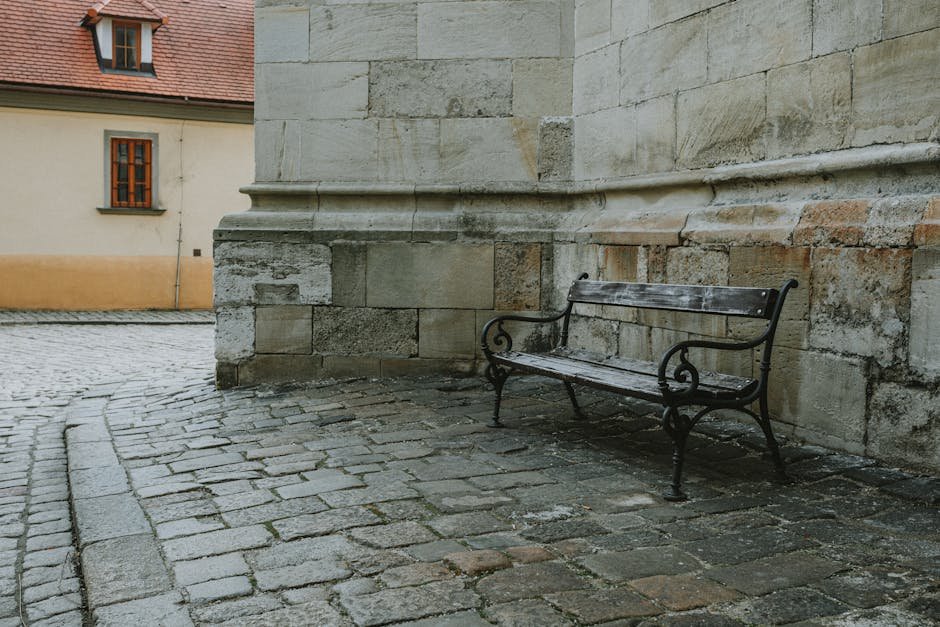
The closing scene — Benji sitting alone on a bench at an American airport after the cousins have parted ways — does not announce its weight. He is waiting for nothing in particular. He has nowhere specifically to go. The camera holds on him for nearly two minutes, and the audience is asked to register that this is what Benji's life looks like when the structure of the tour is no longer holding him up. David's life has the scaffolding of family and work; Benji's life has only the trips he organizes for himself between long flat stretches of waiting.
This is the film's actual argument, and Eisenberg has been making it from the first scene. The tour has been the temporary support that lets Benji be the most alive version of himself, and the support has now ended. The screenplay refuses the closure a more conventional film would have offered — no reconciliation phone call, no resolved sibling-style fight, no triumphant return. There is only the bench, the man, and the camera unwilling to look away. A more conventional film would have made this read as despair. The discipline of the writing and the performance makes it read as truth.
The verdict
Trumpwatcher Score: 4.4 / 5
Rating: 4.4/5
Watch it on whichever streamer carries it in your region, in a single sitting, with the phone elsewhere in the room. The film is built for sustained attention and rewards every minute of it. For a double feature, pair it with Payne's Sideways for the road-comedy lineage, Leigh's Another Year for the ensemble register, or Eisenberg's own When You Finish Saving the World for the writer-director's evolving voice. Any pairing turns one quiet evening into the foundation of a serious film conversation.
For more on Eisenberg's developing directorial voice, this a real pain review sits in our wider independent reviews archive; the verdict methodology is documented at how we score films.
This article is the author's independent critical opinion and does not constitute professional advice. Trumpwatcher is not affiliated with, sponsored by, or endorsed by any film studio, distributor, streaming service, festival, political party, or campaign. All trademarks, titles, and proper names referenced belong to their respective owners and are used for editorial identification only. We do not host, link to, or condone unauthorized copies of any film. Always watch films through official theatrical or licensed streaming channels.