Best Dialogue Driven Movies: When Talk Is the Action
This guide reflects the author's personal opinion. Trumpwatcher is an independent film publication, not affiliated with any studio, streamer, or festival. We do not cover political content.
By Lena Park, Genre & Craft Editor — June 12, 2026
The best dialogue driven movies treat conversation the way an action film treats a car chase: every exchange has stakes, momentum, and the real possibility that someone walks away wrecked. "Talky" gets used as an insult, usually by people who confuse dialogue with filler — but in the right hands, talk is the plot. A confession changes the story's direction. A lie caught mid-sentence detonates a marriage. A jury vote flips because one man asks a better question than the man shouting at him. This watch-guide is for viewers who lean forward when characters start really talking, and it breaks down why these films work, where they fail, and which ones deserve your evening.
What the best dialogue driven movies get right
The defining quality is not the quantity of words; it is that the words carry the consequences. In a conversation-led film, dialogue does the jobs other movies hand to set-pieces: it reveals character under pressure, shifts power between people in real time, and moves the plot through what is said, what is dodged, and what is conspicuously left unsaid. Watch a great two-hander closely and you will notice the screenplay is structured like a duel — advances, feints, retreats — and the editing cuts on reactions as much as lines, because the listener's face is where the damage registers. When people call these films "stagey," they are usually missing how much pure cinema is happening between the sentences.
The specifics: how conversation becomes momentum
Three craft habits separate genuine verbal drama from a filmed transcript. First, objective-driven scenes: each character enters the conversation wanting something concrete — money, an admission, an exit — so the talk has a scoreboard. Second, subtext as suspense: the screenplay lets us know more than one speaker does, turning small talk into a minefield. Third, rhythm as direction: overlapping lines, interruptions, and dead silences are choreographed like fight beats, and the cut decides which combatant we watch absorb the hit. That last point is an editing discipline as much as a writing one — our breakdown of how movie editing changes pacing covers why a reaction shot held two seconds longer can change a scene's entire meaning.
Spoiler policy: this guide describes premises and craft only. No third-act twists or endings are revealed for any film below.
The picks: conversation-led films worth your evening
These are grouped by the kind of verbal arena they build. No rankings, no "definitive" claims — just distinct proofs that talk can hold a screen.
The jury room — argument as architecture
12 Angry Men remains the foundational text: twelve jurors, one room, one verdict, and a screenplay that turns deliberation into a thriller. Sidney Lumet's camera famously sinks lower and tightens as the film proceeds, so the room itself seems to close in as the arguments sharpen. Every plot turn is a sentence someone speaks. It is also a confined-space masterwork, and it pairs naturally with our guide to thrillers that never leave a single room — the two forms share a craft bloodstream.
The walking two-hander — intimacy in real time
Richard Linklater's Before films are the gold standard for conversation as romance. Two people walk and talk — through Vienna, Paris, and finally a Greek hotel room — and the dialogue carries everything: attraction, history, resentment, and the terrifying honesty of long relationships. My Dinner with Andre goes even further, staging nearly its whole runtime as one restaurant conversation and making a philosophical argument feel like a cliffhanger. Several of these run mercifully short, too; Before Sunset appears in our companion guide to tight films that finish before the 90-minute mark for exactly that reason.

The verbal bloodsport — workplaces at war
Glengarry Glen Ross weaponizes salesman patter into something close to horror — David Mamet's clipped, repetitive rhythms turn desperation into music, and the famous motivational monologue is a one-scene masterclass in domination through language. The Social Network runs the same fuel through Aaron Sorkin's engine: depositions, dorm-room arguments, and a breakup scene in the first five minutes that plays like a fencing match. In both, careers and friendships are destroyed without anyone raising a hand. The words are the weapons, and the films cut them like action.
The marriage in freefall — love as a debate nobody wins
Marriage Story builds toward one apartment argument that escalates from logistics to cruelty in a single unbroken crescendo — a scene people reference years later because the dialogue maps exactly how loving people learn to aim for the soft spots. Who's Afraid of Virginia Woolf? is its blistering ancestor: one long night, two couples, and verbal games with real casualties. These films demand more of actors than any stunt rig, because the camera sits close enough to catch the instant a line lands harder than the speaker intended.
One thread runs through every arena above, from the jury table to the kitchen argument: the conversation is never a pause between events — it is the event. Strip the talk out of any of these films and there is no story left, the way removing the heists from a heist picture would leave nothing. That is the real definition worth carrying into your viewing: not "a movie with a lot of lines," but a movie where the lines are the plot, the suspense, and the special effects all at once.
Where talk-heavy films lose ground
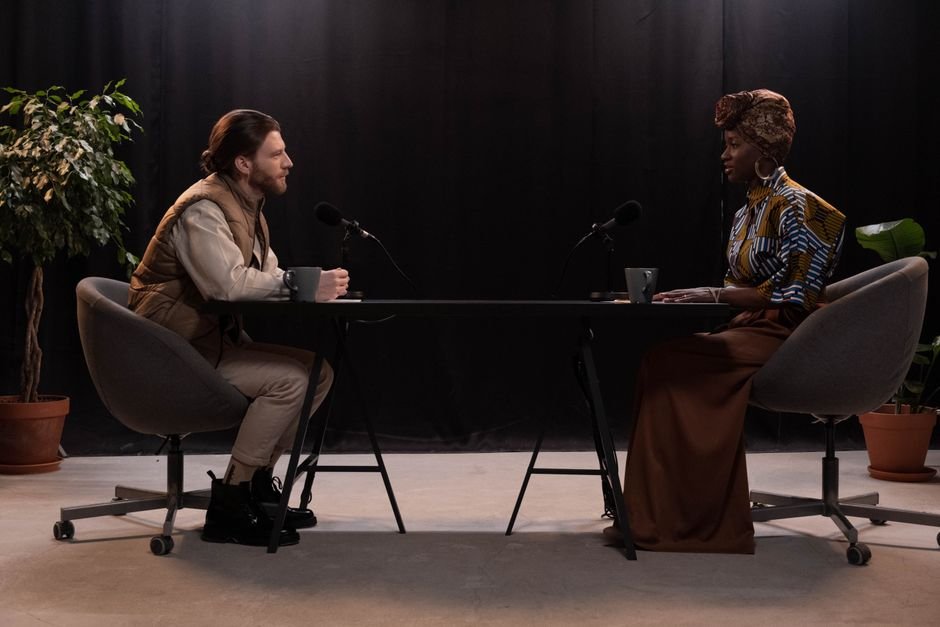
Fairness requires naming the failure mode. A conversation-led film collapses when the dialogue stops being dramatic and starts being decorative — when characters trade clever lines that change nothing, or when every voice sounds like the same screenwriter admiring himself. The other trap is shoe-leather staging: a director who simply points the camera at two faces and waits, instead of blocking, lighting, and cutting the conversation like the contest it is. The films above pass a simple test — mute any scene and you can still read who is winning from posture and framing alone. If a talky film fails that test, no amount of wit will save it from feeling like a podcast with pictures.

How to choose your conversation film tonight
Pick by the kind of tension you want in the room. In the mood for a puzzle of persuasion? The jury room delivers structure and a clean verdict. Feeling romantic, or nostalgic, or both? The walking two-handers are the gentlest entry point and the easiest to love on a first watch. Want adrenaline without explosions? The workplace bloodsport films move faster than most thrillers. Braced for something heavier? The marriage dramas hit hardest with subtitles on and zero distractions, because the half-heard muttered line is often the one that matters. One practical tip applies to all of them: these films punish second-screen viewing more than any genre. Give them your full ear or save them for a night you can.
To go deeper on the craft of screen conversation, the academic essays at Senses of Cinema regularly examine dialogue and performance, and Film Independent publishes working-writer perspectives on building scenes that move a story through speech.
This article is the author's independent critical opinion and does not constitute professional advice. Trumpwatcher is not affiliated with, sponsored by, or endorsed by any film studio, distributor, streaming service, festival, political party, or campaign. All trademarks, titles, and proper names referenced belong to their respective owners and are used for editorial identification only. We do not host, link to, or condone unauthorized copies of any film. Always watch films through official theatrical or licensed streaming channels.
Written by Lena Park, Genre & Craft Editor. See how we score films.